Most car-buying advice gives you one number and sends you to the dealership: save 20% for the down payment. That advice is incomplete. A car doesn't stop costing money when you sign the paperwork, and a large deposit can leave your household exposed if you haven't budgeted for insurance, fuel, repairs, registration, and depreciation.
The better answer to how much should you save for a car is a complete cash-flow target. Save the down payment, protect your emergency reserve, and create an ownership buffer before you buy. Your zero-based budget should show that the car fits every month, not just on purchase day.
Table of Contents
- The Hidden Costs Most Car Buyers Ignore
- Calculating Your Upfront Savings Target
- Weighing New vs Used and Cash vs Financing
- Building a Realistic Monthly Savings Plan
- Funding Your Car Goal with Zero-Based Budgeting
- Final Readiness Checklist Before You Buy
The Hidden Costs Most Car Buyers Ignore
A down payment is only the entry fee. The car still needs insurance, fuel, maintenance, registration, and repairs after it reaches your driveway. Depreciation also reduces the vehicle's value, which matters if you sell or trade it before the loan balance falls far enough.
AAA's ownership studies place the average annual cost of owning and operating a new vehicle at roughly $11,577 to $12,863, or about $965 to $1,072 per month, depending on the study and period measured. Those totals include depreciation, finance charges, insurance, registration, fuel, and maintenance, as summarized by Navy Federal's overview of car ownership costs. Your vehicle may cost less, but the point remains: the loan payment isn't the whole bill.
Build the buffer before you shop
Treat the purchase as two separate savings goals:
- Purchase cash: Your down payment, taxes, registration, fees, and any immediate vehicle work.
- Ownership cash: A separate reserve for insurance changes, fuel, maintenance, repairs, and the first stretch of regular ownership.
Don't drain your emergency fund to make the down payment look impressive. A car is useful, but it is still a depreciating asset. If the purchase leaves you unable to handle a repair or income interruption, the transaction wasn't affordable.
Practical rule: If your budget works only when nothing goes wrong, you haven't finished saving for the car.
Insurance can also vary with the vehicle's condition, accident history, title status, and other details. Before choosing a used model, review how vehicle history affects insurance, then ask your insurer for an actual quote. Guessing at insurance is how buyers create a payment that looks manageable but breaks the monthly plan.
Separate fixed and flexible costs
Your loan payment may be fixed, while fuel and repairs move around. Use a fixed-expenses budgeting framework to identify the costs that must be funded every month, then add sinking funds for less frequent bills.
The purchase target should therefore include more than the deposit. Save enough to make the initial transaction without touching your safety net, and keep a dedicated ownership reserve that gives your household room to absorb normal surprises. That approach is less exciting than shopping at the maximum approval amount, but it protects your cash flow long after the test drive.
Calculating Your Upfront Savings Target
A down payment is only the entry fee. Your real target is the cash required to buy the vehicle without creating a monthly shortfall afterward. Start with a clear framework: the 20/4/10 rule recommends a 20% down payment, a loan term of four years or less, and total vehicle costs capped at 10% of monthly take-home pay, according to AAA's car-buying savings guidance. Treat it as a budgeting benchmark, not a rule imposed by a lender.
For a $30,000 car, a 20% deposit requires $6,000 before purchase. The payment, insurance, fuel, and maintenance must then fit your monthly plan. Used-car shoppers can use 10% to 15% as a practical planning range, while new-car buyers should aim closer to 20%, as outlined in Bankrate's average car-payment analysis. Build the target in your zero-based budget before you shop, so the deposit does not consume money assigned to other needs.
Use the vehicle price, not the payment, as your starting point
A dealer can make an expensive vehicle appear affordable by stretching the loan. Set your maximum purchase price first, calculate the cash required, then test the resulting payment against your budget. CNBC Select's car-affordability guide cites a 2026 market snapshot showing an average new-car transaction price of $49,461.
The same source reports an average new-car down payment of about 13% in the third quarter of 2025. On that price, 13% equals about $6,430, while 20% equals about $9,892. The gap represents cash you must save before purchase or add to the financed balance.
| Vehicle Price | 10% Down, Used Target | 13% Down, Current Avg | 20% Down, Ideal Target |
|---|---|---|---|
| $30,000 | $3,000 | $3,900 | $6,000 |
| $49,461 | $4,946 | $6,430 | $9,892 |
Use the table to set a limit, not to justify a larger purchase. Bankrate's average car-payment analysis cites an average new-car payment of about $765 per month. A larger deposit lowers the principal and interest exposure, but it is useful only if your emergency savings and ownership reserve remain intact.
Make negative equity harder to create
A larger deposit creates more room between the loan balance and a vehicle's falling value. That protection matters when you buy new, borrow for too long, or add an old loan balance to the replacement loan. Set a hard price ceiling, calculate the deposit, and reject any option that pushes the rest of your zero-based budget into deficit.
For a used vehicle, begin with at least the 10% target and raise it when the car's age, condition, or financing terms add uncertainty. Review the vehicle's history before committing. A Camry buyer can consult VinCheck's Toyota Camry history resource, then pair that research with an independent inspection and an insurance quote. The upfront target is complete only when the purchase and the first stretch of ownership fit your cash plan.
Weighing New vs Used and Cash vs Financing
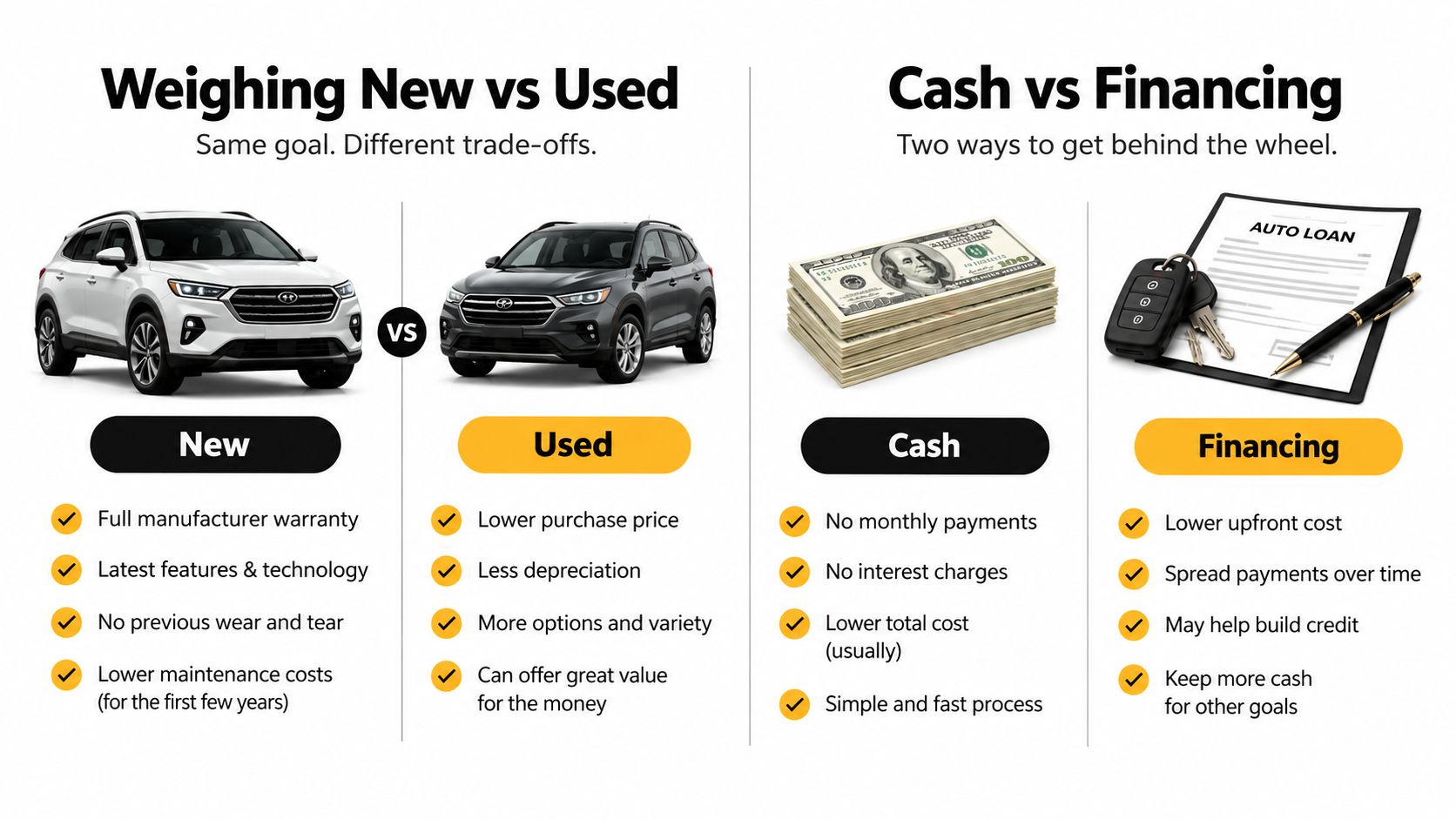
New versus used isn't a simple contest. A new car may offer current safety equipment, a warranty, and more predictable early maintenance, but it usually requires a larger purchase target and can lose value quickly. A used car may reduce the upfront price, yet its repair risk and financing terms can change the total cost.
Your savings target should reflect the risk you're choosing. For a new car, aim for the higher end of the deposit range and preserve an ownership reserve. For a used car, don't treat the lower deposit target as a reason to arrive with no cash left. A repair reserve matters more when the vehicle's condition is less predictable.
Match the payment method to your safety net
Paying cash removes the loan payment and interest exposure, but it ties a large amount of money to a depreciating asset. Financing preserves liquidity, yet it creates a mandatory monthly obligation. Neither choice wins automatically.
Use this decision test:
- Pay cash when the purchase won't weaken your emergency reserve and the car's price fits comfortably within your broader goals.
- Finance with a strong deposit when keeping cash available protects your household from likely disruptions.
- Delay the purchase when either method would leave you relying on credit for routine bills or repairs.
A down payment should lower the financed balance without consuming every accessible dollar. If paying cash would empty your reserves, financing part of the purchase may be the safer household decision. If financing only works across an extended term or requires you to ignore insurance and maintenance, the vehicle is too expensive.
Compare total risk, not just monthly comfort
Warranty coverage can make a new car's early costs easier to forecast, while a used car may demand more immediate attention. Cash gives you payment-free ownership, while financing gives you flexibility but requires discipline. Your choice should follow the condition of your emergency fund, income reliability, existing debt, and the car's expected operating needs.
The right question isn't, “Which option has the lowest payment?” Ask, “Which option leaves enough monthly margin for the rest of my life?” That answer determines how much you need to save and whether you should buy now at all.
Building a Realistic Monthly Savings Plan
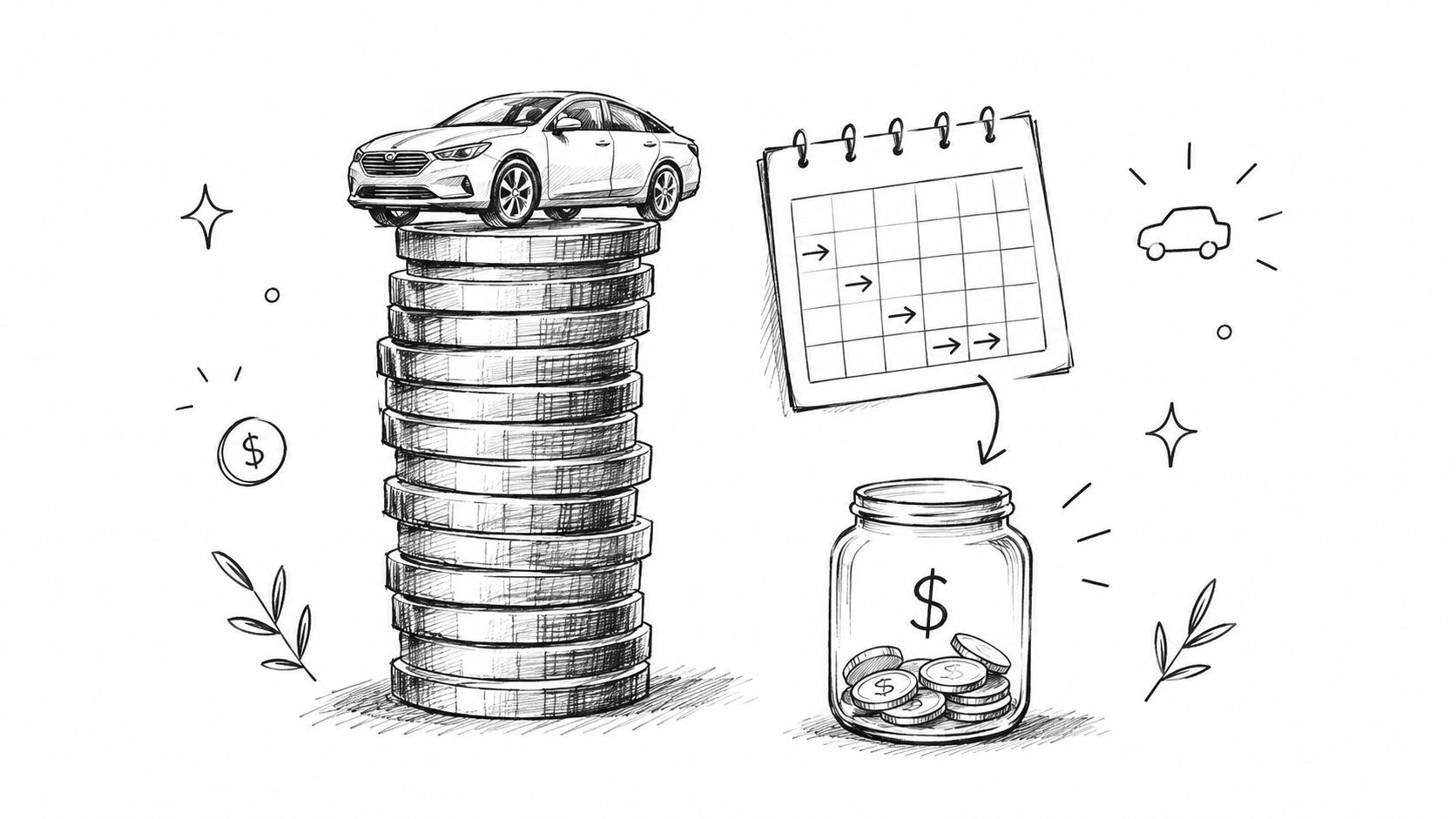
Once you choose a target, divide it by the number of months until purchase. That simple calculation turns “I need a car someday” into a required transfer you can test against your current budget.
For example, suppose your total target includes the deposit and a separate ownership buffer. A 12-month timeline demands the largest monthly contribution, a 24-month timeline spreads the same goal more gently, and a 36-month timeline lowers the monthly strain further. The exact target depends on your chosen vehicle, but the calculation never changes:
Total cash target ÷ months until purchase = monthly car transfer
Use a timeline that your budget can sustain
Start with the amount your budget can save without skipping bills or raiding other priorities. If the required transfer is too high, don't pretend the gap will disappear through motivation. Choose a less expensive vehicle, increase income, reduce discretionary spending, or extend the timeline.
A high-yield savings account can keep the money separate and may add interest, but interest shouldn't be the reason the plan works. Automate the transfer after income arrives, then treat it like a required bill. Keep the car fund distinct from your emergency fund so you can see whether you're actually ready.
Test the plan against real spending
Before choosing a transfer amount, review several months of bank and card activity. Use this guide to tracking spending to identify subscriptions, takeout, shopping, and other categories that regularly absorb money without appearing in your mental budget.
Then run a trial month. Transfer the planned car amount into savings and live on what remains. If the month ends with overdrafts, credit-card dependence, or skipped essentials, the target is too aggressive. Adjust the price or timeline before you make a purchase commitment.
Keep irregular expenses in view. Insurance renewals, registration, maintenance, and seasonal fuel changes can disrupt a plan that looks fine on paper. Assign money to those categories before assigning every available dollar to the deposit.
Funding Your Car Goal with Zero-Based Budgeting
A down payment is only one part of the target. Build the car fund into a zero-based budget that covers purchase cash and the ownership costs waiting after you leave the dealer. Assign expected income to bills, savings, debt repayment, and goals until every dollar has a job. A zero balance means nothing is unassigned, not that you spend everything.
Base the plan on reliable take-home income. Salaried households can use the amount expected from each paycheck. Freelancers and contractors should budget from a conservative income estimate, then keep strong months from expanding regular lifestyle spending.
Give the car goal a permanent budget line
Create separate categories for the deposit, insurance, fuel, maintenance, registration, and repairs. A single “car” category hides shortfalls. Separate lines show whether you are building a complete ownership buffer or only saving purchase cash.
Use this allocation order:
- Fund essentials first. Cover housing, food, utilities, healthcare, minimum debt payments, and other required bills.
- Protect the safety reserve. Keep emergency savings intact instead of using it to reach the deposit faster.
- Set the car transfer. Treat the monthly contribution as a required allocation, not leftover money.
- Add ownership sinking funds. Reserve cash for maintenance, registration, insurance changes, and repairs.
- Direct the remainder. Assign flexible money to extra debt payments, lifestyle categories, or a shorter car timeline.
Find leaks, then redirect them deliberately
Review transactions by category instead of relying on memory. Forgotten subscriptions, convenience purchases, delivery fees, and unplanned shopping often provide the quickest savings. Cancel or reduce costs that do not support your priorities, then transfer the freed money into the car categories immediately.
Peaceful Mindful Pocket LLC offers a zero-based budgeting app with planned categories, transaction tracking, drag-and-drop categorization, and savings buckets for goals such as a car. It can help compare planned amounts with transactions and reassign money when spending changes.
For irregular income, use a holding category. Deposit variable income there, then fund the next month's essentials and car allocations from that balance. Send unusually strong income toward the ownership buffer or emergency savings instead of raising the vehicle price after one good month.
Build a response for bad months before they arrive. If income falls, reduce discretionary categories first, then slow the car timeline rather than borrowing to preserve it. Follow a practical budget routine for reviewing and adjusting spending each month, recording actual transactions and keeping the ownership buffer funded.
Final Readiness Checklist Before You Buy
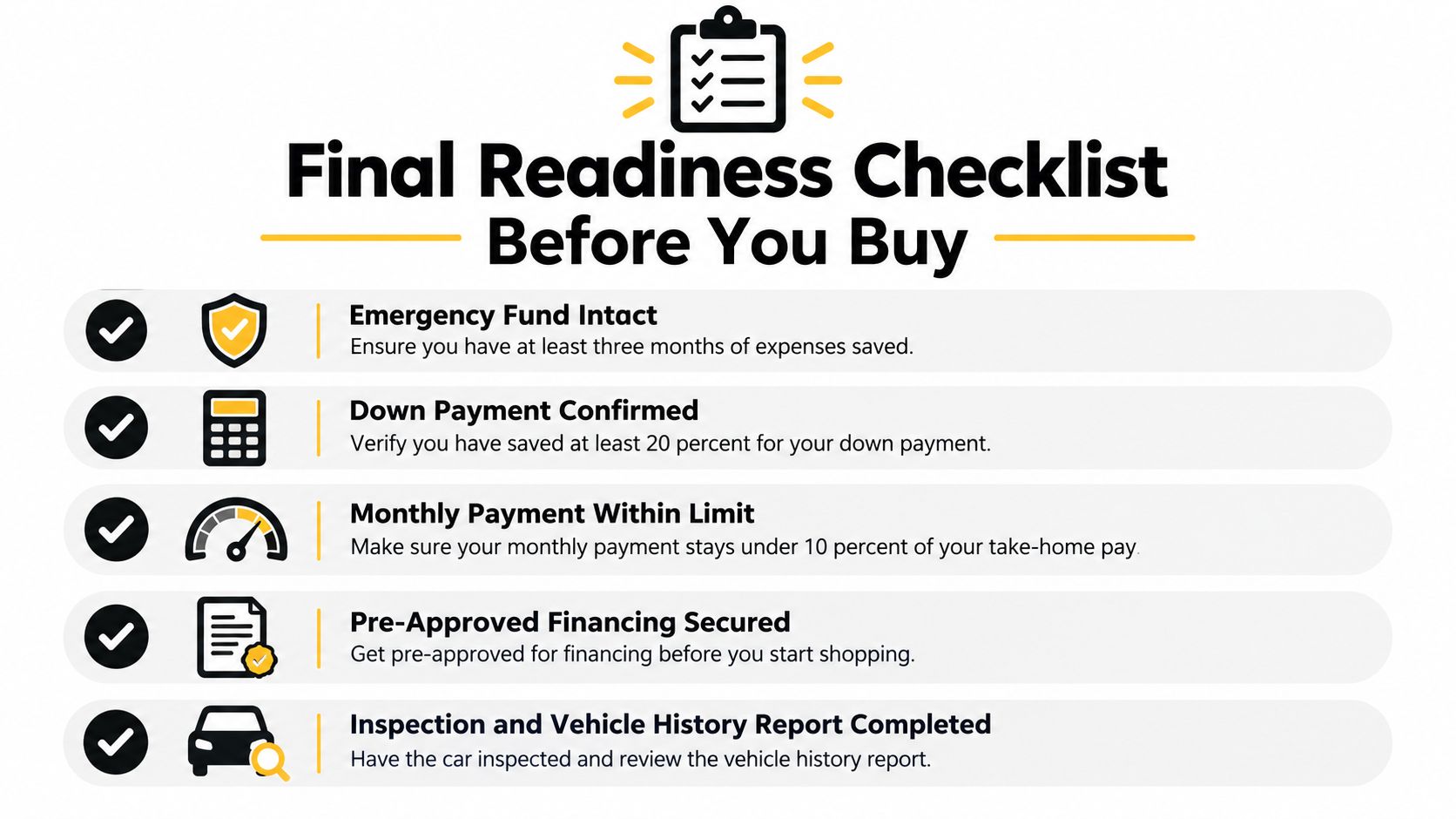
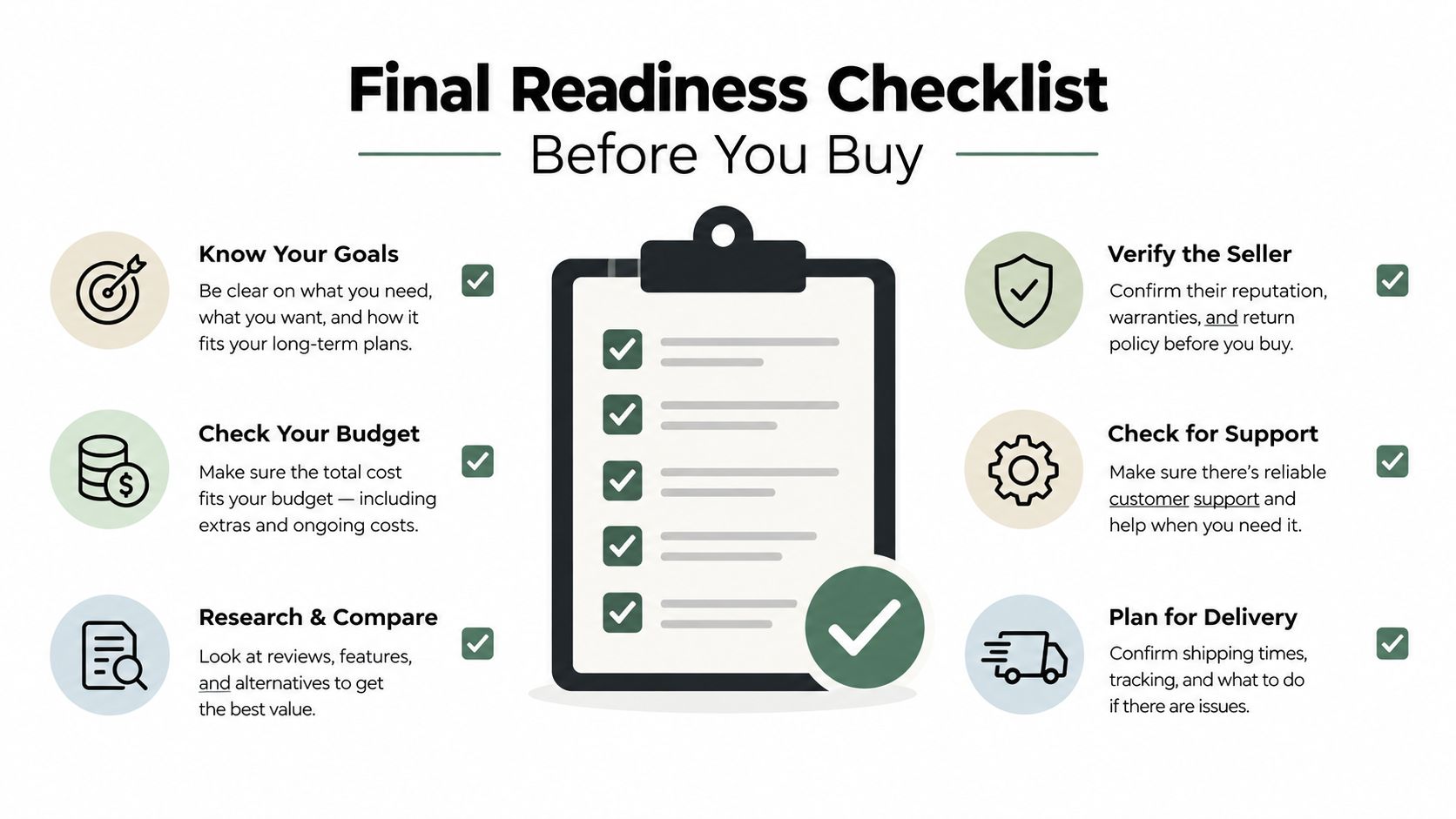
Reaching the down payment does not make you ready. Buy only when the purchase cash, ownership buffer, and monthly budget work together without draining your financial safety net.
Use this checklist before contacting a dealer:
- Purchase cash is complete. Keep the down payment and immediate purchase costs separate from emergency savings.
- The monthly budget survives a test. Fund the future payment, insurance, fuel, maintenance, and registration categories before the purchase. Let that trial run expose any shortfall.
- The ownership buffer exists. Reserve cash for routine vehicle costs and predictable repairs. Do not plan to cover them with a credit card.
- The loan fits the rule. Use the 20/4/10 framework covered earlier in this guide: target 20% down, choose a loan term of four years or less, and keep total vehicle costs within 10% of monthly take-home pay.
- The emergency fund stays intact. The purchase should not turn an unexpected bill into new debt.
- The vehicle has been checked. Review its history, arrange an independent inspection, verify insurance, and confirm the final out-the-door price.
Make the final decision from cash flow
If the payment fits but ownership categories do not, wait. If the down payment would erase your emergency reserve, save longer or choose a cheaper vehicle. Households with irregular income should require a larger cash margin before accepting a fixed payment.
The strongest car purchase looks manageable on paper. You know the price, cash required, monthly ownership cost, repair plan, and effect on other goals. The vehicle should fit an ordinary month and a difficult one, not merely the maximum amount a lender approves.
Peaceful Mindful Pocket LLC helps individuals and families assign each dollar a job, track transactions, and create savings buckets for a car and future ownership costs. Use a zero-based plan before shopping, as outlined in AAA's budgeting explanation.