Your paycheck arrives, the bills get paid, and you're sure there should be something left. Then groceries, takeout, an insurance renewal, and a few forgotten subscriptions absorb the difference. You earn a decent income, but your savings balance barely changes.
A 10k money challenge gives that leftover money a job before you spend it. Instead of treating the full target as something you'll reach someday, you break it into monthly, weekly, or per-paycheck contributions and build those contributions into your budget.
The right method depends on when your money arrives. A salaried worker can schedule predictable transfers. A freelancer needs a rule that works after payments clear, not before.
These seven approaches give you different ways to make progress, from a weekly savings routine to a windfall allocation rule. You don't need to use them all. Pick a main method, add a supporting tactic if it helps, and protect essential bills while you save.
Table of Contents
- 1. 52-Week Money Challenge
- 2. Zero-Based Savings Sprint (Goal-Based Budget Plan)
- 3. 30-Day No-Spend Challenge
- 4. Subscription and Recurring Expense Audit
- 5. Cash Stuffing (Envelope System)
- 6. Automated Pay-Yourself-First Transfers and Round-Ups
- 7. Income Windfall and Raise Allocation Challenge
- How the 7 Methods to Reach $10,000 Compare
- Pick One Method and Start This Week
1. 52-Week Money Challenge
A weekly challenge gives you a regular appointment with your savings. The familiar version starts with small deposits and increases them over time, but a rising deposit schedule doesn't automatically match your income.
That's the main trade-off. Escalating contributions can feel motivating early on, then become difficult just when holiday spending or annual bills arrive. Before starting, put the entire deposit schedule in a spreadsheet and check the largest contribution against your actual surplus.
Choose a schedule you can finish
Timeline: Use a yearlong weekly routine, but extend the finish date if the required deposits don't fit. A flat contribution is often easier to sustain than a schedule that gets harder every week.
- Steady-income sample plan: Create a weekly savings category. Fund it from each paycheck, then transfer the planned amount on the same weekday.
- Irregular-income sample plan: Review cleared income weekly. Reserve upcoming bills and taxes, then transfer available surplus rather than forcing a deposit during an unpaid week.
- Progress check: Record both the planned contribution and the completed transfer. Don't count money that's still sitting in checking and needed for bills.
Say a couple wants a visible savings habit but already has an expensive season ahead. They can use a weekly tracker while keeping contributions level instead of increasing them.
A missed deposit is a reason to revise the schedule, not automatically double the next transfer.
In Peaceful Mindful Pocket, create a $10K Challenge category and compare planned amounts with actual deposits. The tracker should support your budget, not pressure you into borrowing to keep a streak alive.
2. Zero-Based Savings Sprint (Goal-Based Budget Plan)
Give savings a place in the budget before deciding what's available for discretionary spending. With a zero-based plan, you assign income to bills, everyday spending, debt, reserves, and savings until nothing remains unassigned. That doesn't mean emptying your bank account.
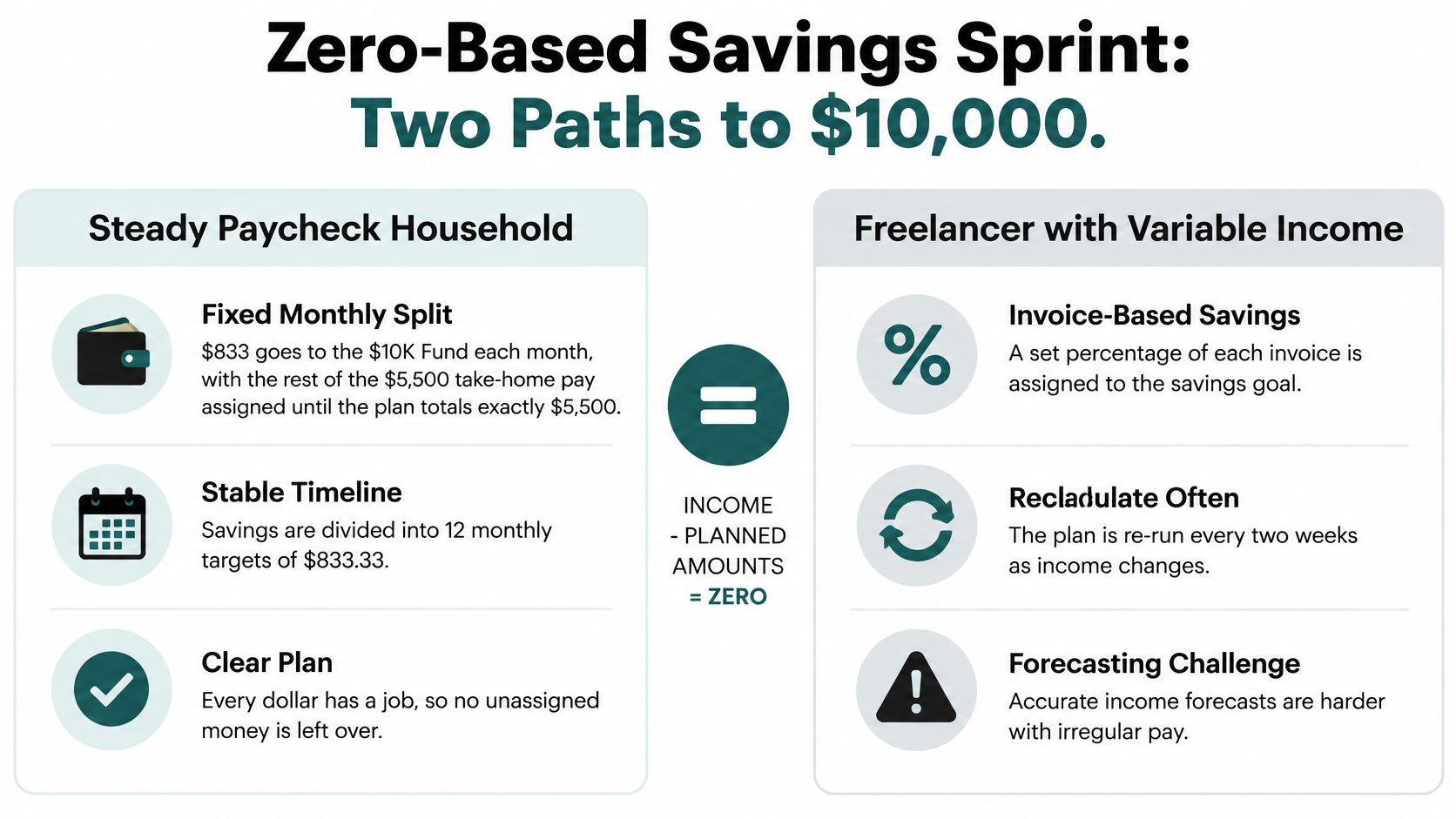
For a yearlong challenge, the target is $833.33 per month, according to The Fabulous's savings challenge guide. Treat that as a feasibility test, not an obligation to save money you don't have.
Build the plan around available income
Timeline: Start with an annual target and review the plan monthly. If the contribution doesn't fit after essentials and reserves, change the deadline or identify a specific expense to reduce.
- Steady-income sample plan: Enter take-home pay, assign essential bills and irregular expenses, then fund the challenge category. Adjust dining, shopping, or entertainment only after seeing the complete plan.
- Irregular-income sample plan: Budget cleared payments rather than expected invoices. Allocate money to taxes, operating costs, household essentials, and savings whenever payment arrives.
This process illustration shows how paycheck patterns change the route.
Say you're saving to move home. Your budget needs separate categories for the challenge, moving costs, and bills that continue during the transition. If you're preparing to buy, use the same approach to plan monthly down payment savings without treating your emergency reserve as available deposit money.
In Peaceful Mindful Pocket, set income sources and planned category amounts first. Then use the ledger to adjust the plan when actual spending differs.
3. 30-Day No-Spend Challenge
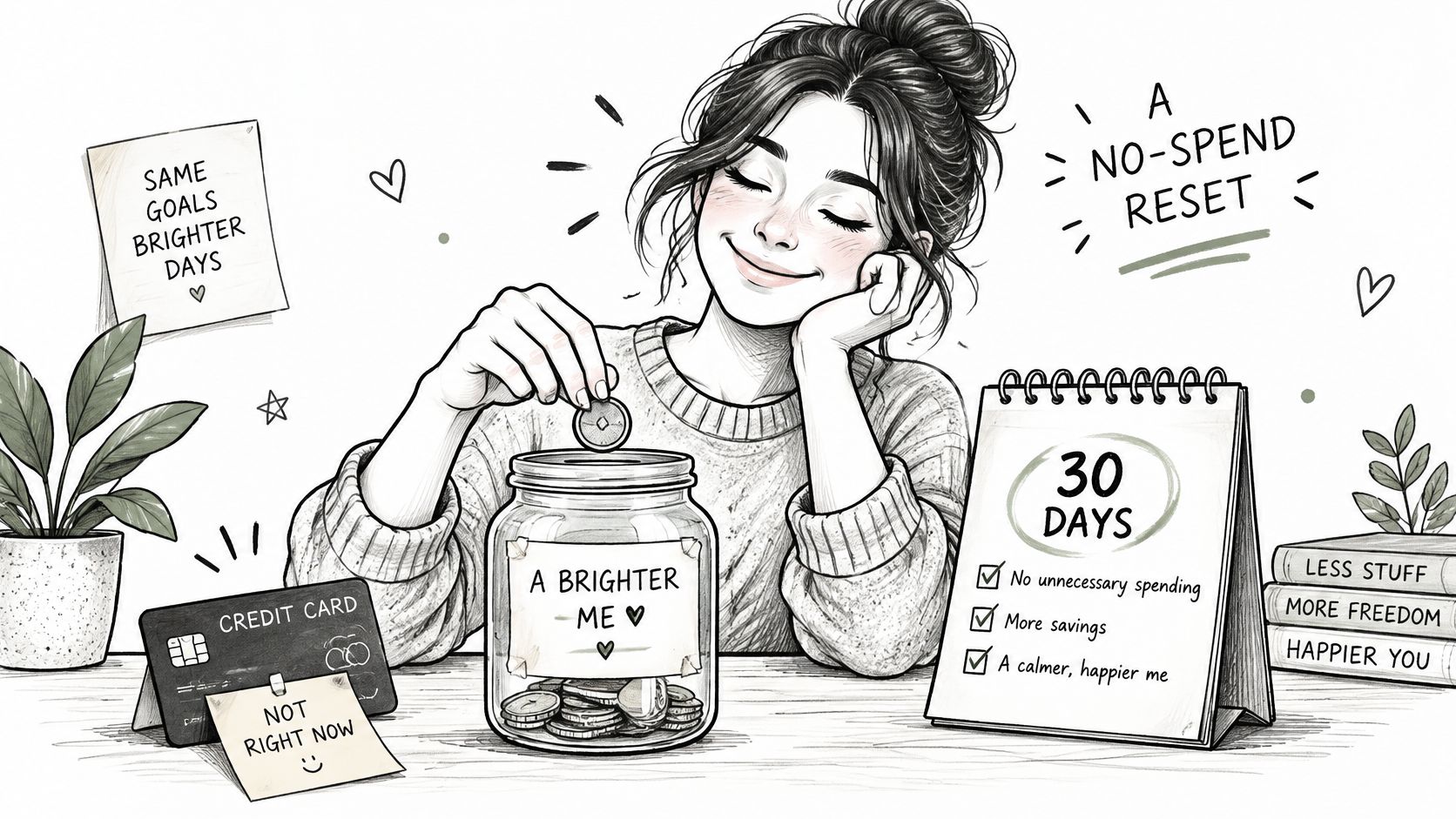
A no-spend challenge works best as a temporary reset, not a permanent ban on enjoying your money. You pause discretionary purchases while continuing to pay for housing, groceries, transportation, insurance, healthcare, and minimum debt payments.
The useful question isn't whether you bought absolutely nothing. It's whether you redirected money you would otherwise have spent.
Keep the reset short and measurable
Timeline: Use a monthlong reset to accelerate a longer savings plan. Don't assume it can fund the entire challenge, especially if your discretionary spending is already modest.
For steady income, move the planned dining, entertainment, and shopping money into savings as those spending periods pass. Leave enough in checking for genuine essentials rather than transferring everything at the start.
For irregular income, use the spending pause to lower the amount your household needs between payments. Transfer the remaining surplus only after checking upcoming obligations.
Say a family frequently orders dinner because nobody has planned the evening meal. Their no-spend plan should include easy freezer meals and a grocery list, not just a promise to stop ordering.
Practical rule: Savings count when the money stays saved, not when a purchase is merely postponed until the challenge ends.
Keep a wish list for nonessential purchases and review it after the reset. Some items will still matter; others won't. Compare planned discretionary spending with actual transactions in Peaceful Mindful Pocket, and transfer the difference rather than guessing what you saved.
4. Subscription and Recurring Expense Audit
Open your bank and card statements before canceling anything. Recurring expenses include more than streaming services: look for cloud storage, software, memberships, delivery plans, insurance renewals, and app subscriptions.
Timeline: Complete the initial audit during a focused budget session, then review recurring charges whenever a renewal notice arrives. Unlike a temporary spending freeze, a canceled charge can free up money in future budget periods.
Turn cancellations into actual savings
Sort each charge by what you'll do with it:
- Keep: You use it, need it, and have budgeted for it.
- Change: A lower tier or different billing arrangement would meet your needs.
- Cancel: You no longer use it or already pay for an overlapping service.
Steady-income sample plan: Cancel an unused membership, confirm the final billing date, then redirect the former payment into your challenge category. Schedule the transfer only after the charge has actually stopped.
Irregular-income sample plan: Remove overlapping work software to reduce your baseline expenses. Keep essential business tools, and allocate the resulting surplus after client payments clear.
Say a freelancer pays for separate tools that perform the same task. Consolidating them may help, but check stored files, client access, and export options before closing an account.
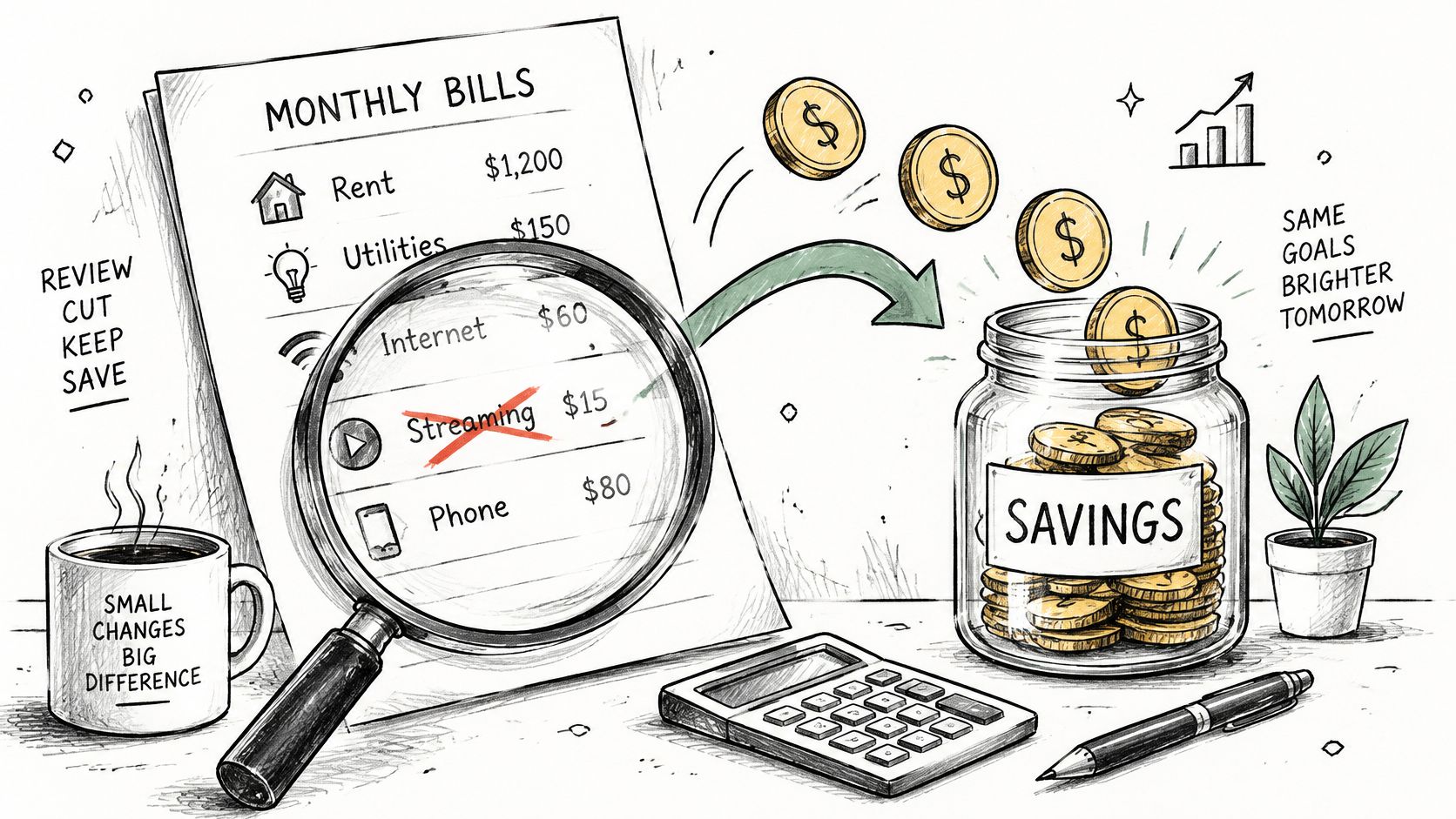
Don't confuse removing an app with canceling its billing agreement. Follow the provider's process, save confirmation, and inspect subsequent statements. For a gym contract, the Crunch membership cancellation guide can help you prepare.
Importing transactions into Peaceful Mindful Pocket makes it easier to categorize these charges and assign the freed money deliberately.
5. Cash Stuffing (Envelope System)
When card spending feels disconnected from your budget, envelopes make the limit visible. Assign money to categories such as groceries, transportation, dining, and savings. When a spending envelope is empty, pause that spending or consciously reassign money from another category.
Cash stuffing controls spending. It doesn't create surplus by itself. You still need a workable budget before filling the envelopes.
Use physical limits without storing the whole goal in cash
Timeline: Refill spending envelopes each payday and reconcile them weekly. Keep the challenge running until your savings account reaches the target, rather than setting a deadline the envelopes can't support.
- Steady-income sample plan: Transfer the planned savings contribution when pay arrives. Withdraw only the cash needed for categories where physical limits help.
- Irregular-income sample plan: Fill essential envelopes from cleared income first. Fund discretionary envelopes and savings after protecting obligations due before the next likely payment.
- Digital alternative: Use budget categories or separate account buckets when cash would be inconvenient.
Say a couple repeatedly overspends on dining out. A shared dining envelope makes the remaining limit clear without forcing every household expense into cash.
Keep the savings target separate from spending envelopes. You shouldn't need to carry your emergency reserve to make the system feel real.
For setup guidance, use the cash envelopes for budgeting guide. Mirror the categories in Peaceful Mindful Pocket so cash withdrawals don't disappear from your records.
This video offers another way to visualize the envelope routine.
6. Automated Pay-Yourself-First Transfers and Round-Ups
Automate a contribution you can sustain, then increase it when your budget supports the change. Round-ups can supplement that transfer, but they're a weak main strategy because your progress depends on making purchases.
In retirement plans, Vanguard's analysis found that participants with automatic enrollment and automatic annual contribution increases saved 20%–30% more after three years than participants with automatic enrollment alone. That isn't a forecast for a personal savings challenge, but it supports using a baseline contribution with planned increases rather than relying on motivation.
Automate the transfer, not the risk
Timeline: Use recurring transfers throughout your chosen savings period. Review the amount when pay, bills, or household circumstances change.
Steady-income sample plan: Schedule a transfer after your paycheck clears. Check that checking can still cover upcoming bills and your operating buffer.
Irregular-income sample plan: Tie contributions to cleared payments rather than calendar dates. Reserve taxes and essential costs before moving the savings share.
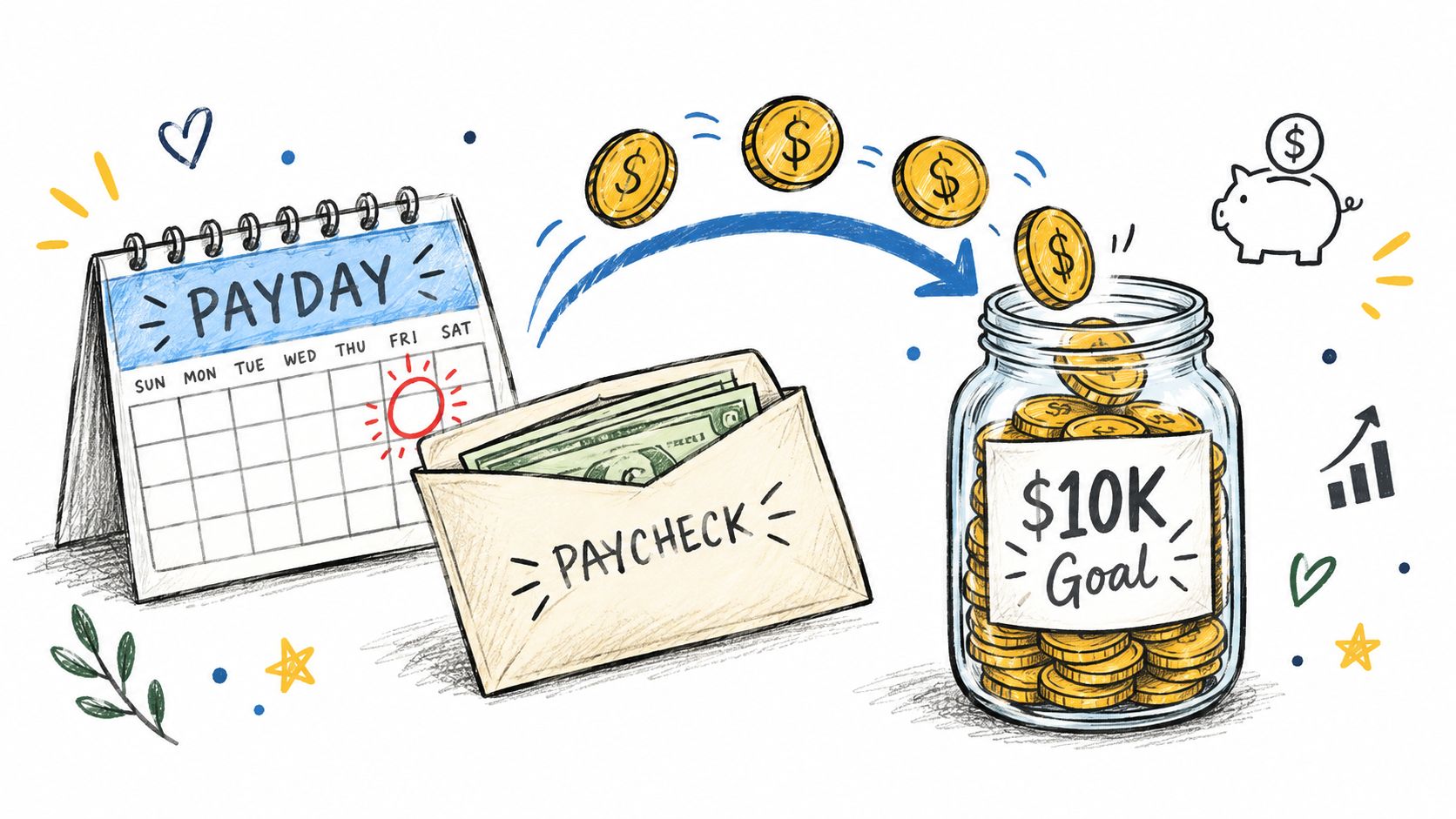
Say your household finishes paying for a recurring expense. Redirect that former payment into savings after confirming it's no longer needed elsewhere.
Bank transfers and transaction categorization are different tasks. Set transfers through your financial institution, then use Peaceful Mindful Pocket's automation rules to organize savings-related activity. Count completed transfers, not pending instructions, and pause automation before it causes an overdraft.
7. Income Windfall and Raise Allocation Challenge
Decide what extra income will do before it arrives. A raise, bonus, refund, or unusually strong client payment is easier to allocate before you've committed it to new spending.
This method suits people whose savings capacity arrives unevenly. Its weakness is predictability: you can't build a reliable finish date around money that may never arrive.
Give extra income a clear order of priority
Timeline: Allocate each windfall when it clears. Recalculate your expected completion date after receiving the money, rather than assuming future bonuses or client work will fund the challenge.
- Steady-income sample plan: Keep your existing spending plan after a raise. Direct the affordable increase in take-home pay toward savings, while allowing for any expenses that have also increased.
- Irregular-income sample plan: Separate taxes and business costs from each payment. Protect the household buffer, then allocate part of the remaining surplus to the challenge.
- Shared-household plan: Agree in advance whether extra income goes to savings, debt, or an overdue essential expense.
Say a contractor receives a large payment after a slow stretch. That deposit isn't all extra money. It may need to replace income that didn't arrive earlier and cover work already performed.
Before you transfer: Separate genuine surplus from money that already has a job.
In Peaceful Mindful Pocket, track income sources separately and assign money to tax, operating, household, and challenge categories. Avoid a universal tax percentage; your reserve should reflect your own obligations.
A windfall rule works well alongside a modest baseline contribution. The baseline supports consistency, while extra income can shorten the timeline without making ordinary months unnecessarily tight.
How the 7 Methods to Reach $10,000 Compare
| Item | Best For | Savings Pattern | Setup Effort | Income Type |
|---|---|---|---|---|
| 52-Week Money Challenge | Beginners and families who like visual goals | Weekly deposits increase by a set amount | Low; choose deposit schedule and track progress | Any |
| Zero-Based Savings Sprint (Goal-Based Budget Plan) | People who want a detailed plan for reaching a savings target | Assign income to expenses and savings until every dollar has a job | High; build and regularly review a full budget | Fixed or variable |
| 30-Day No-Spend Challenge | People seeking a short-term reset of discretionary spending | Redirect avoided non-essential spending to savings | Low; define essentials and track spending | Any |
| Subscription and Recurring Expense Audit | People with recurring charges to review | Redirect ongoing savings from canceled or downgraded expenses | Low; review transaction history and act on findings | Any |
| Cash Stuffing (Envelope System) | Beginners and people who benefit from firm spending limits | Allocate money to category envelopes, including savings | Moderate; set up and regularly reconcile envelopes | Any |
| Automated Pay-Yourself-First Transfers and Round-Ups | People seeking consistent saving with less decision-making | Automatically transfer set amounts or purchase round-ups | Moderate; configure transfers and check cash flow | Regular or variable |
| Income Windfall and Raise Allocation Challenge | People receiving raises, bonuses, refunds, or irregular income | Direct a chosen share of new income to savings | Low; set an allocation rule and transfer funds | Variable or growing income |
Pick One Method and Start This Week
Choose the method that fits your paycheck pattern, not the one with the most appealing tracker. Steady earners can start with a zero-based plan and automated transfers. Irregular earners can start with a per-payment allocation and a written windfall rule.
Then add a supporting tactic if you need it. An expense audit can free up room for the main contribution. Envelopes can control a spending category that repeatedly runs over budget, while a no-spend reset can help you question purchases you've stopped noticing.
Protect resilience before chasing the finish line
Your savings challenge should make the household more secure. In the Federal Reserve's survey of U.S. household financial well-being in 2024, 55% of adults reported having savings sufficient to cover three months of expenses. That makes accessible reserves an important consideration, not a distraction from the challenge.
Define what your money is for before calling it available. Emergency savings, a down payment, annual bills, and debt repayment serve different purposes, even if you track them in the same app.
- Protect essentials: Keep housing, food, utilities, healthcare, and minimum debt payments funded.
- Preserve liquidity: Don't lock away money you may need before the next paycheck.
- Adjust realistically: If contributions repeatedly require reversals, lower the amount or extend the deadline.
Review progress using completed deposits and actual spending. If you cancel a subscription and automate the freed amount, that's the same saving, not separate progress under different methods.
A successful 10k money challenge leaves you with money you can keep, not a savings screenshot followed by credit-card borrowing. Today, create a dedicated savings category and assign the first amount your current budget can safely support.
Peaceful Mindful Pocket LLC offers a zero-based budgeting app that helps you set income sources, assign planned amounts, and compare your plan with actual transactions. Visit Peaceful Mindful Pocket LLC to create your challenge category and give your next savings contribution a clear place in your budget.